
Description
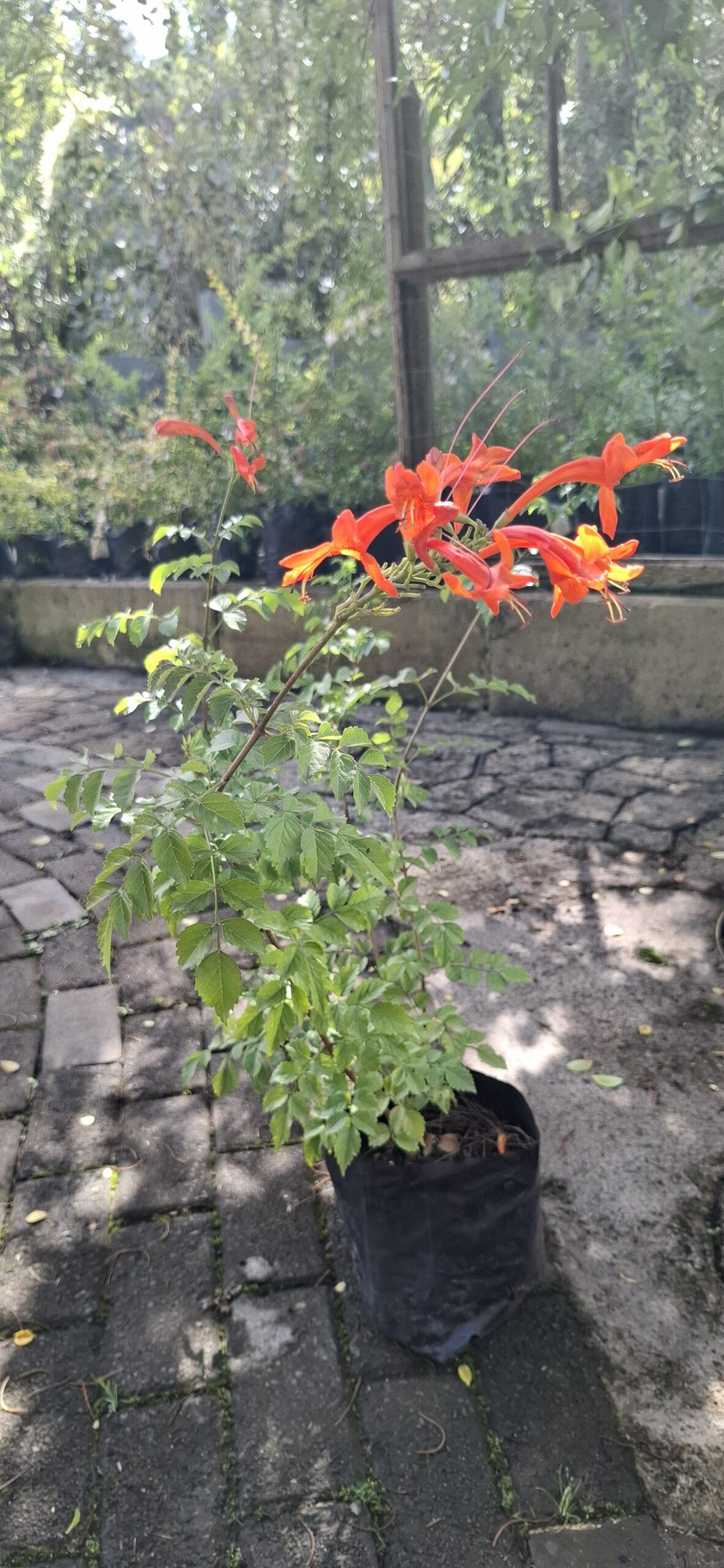
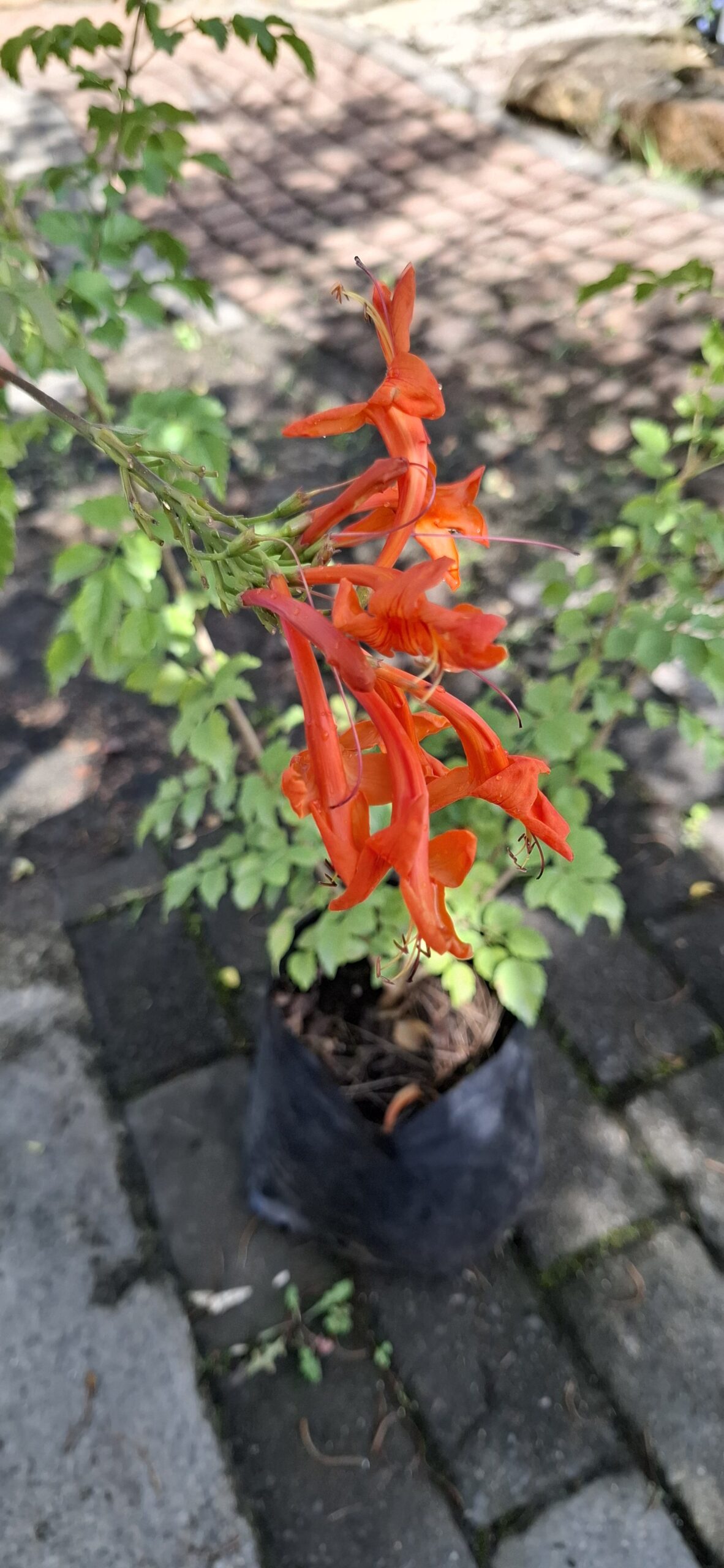
Cape Honeysuckle (Orange)
Tecoma capensis
Growing Conditions
SUNLIGHT
Full sun to light shade; performs best and flowers most prolifically in at least 6 hours of direct sun daily. Flowering diminishes noticeably in heavy shade.
WATERING
Water deeply once or twice a week during the first growing season to establish roots. Once established, it is highly drought-tolerant and can survive on rainfall alone in most South African regions, though a deep watering every 2–3 weeks during dry summer spells will encourage better flowering.
SOIL TYPE
Adaptable to a wide range of soils including sandy, loamy, and clay-based soils, provided drainage is reasonable. Prefers a well-drained, moderately fertile soil with a slightly acidic to neutral pH of 6.0–7.0. Tolerates poor soils well.
TEMPERATURE
-3°C to 40°C — handles mild frost once established, though young plants should be protected from hard frost below -2°C. Thrives in the heat of South African summers.
HUMIDITY
Tolerates low to moderate humidity; well-suited to the dry Highveld and semi-arid regions as well as the more humid coastal areas of KwaZulu-Natal and the Western Cape.
FERTILISING
Feed once in early spring and once in midsummer with a balanced slow-release granular fertiliser (e.g. 3:1:5 or similar). Avoid excessive nitrogen, which promotes lush foliage at the expense of flowers.
GROWTH RATE
Fast — can extend by 1–2 metres per year under ideal conditions, making it excellent for rapidly establishing a hedge, screen, or bank cover.
MATURE SIZE
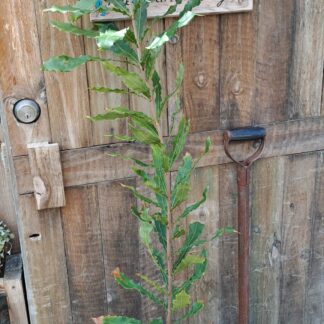
2–3 m tall x 2–4 m wide as a sprawling shrub; can be trained against a wall or fence to reach 4–5 m, or clipped regularly to maintain a compact hedge of 1–1.5 m.
Did You Know?
Tecoma capensis is one of the most important nectar sources for the Cape Sugarbird (Promerops cafer) and various sunbird species in South Africa — the tubular orange flowers are specifically shaped to accommodate their long, curved bills, making this a textbook example of co-evolution between a plant and its pollinators in the Cape Floristic Region.


Reviews
There are no reviews yet.