
Why Snake Plants Rule
Extremely low-maintenance (neglect-resistant)
Excellent air purifiers (removes formaldehyde, benzene, xylene, toluene, trichloroethylene)
Releases oxygen at night (unlike most plants)
Architectural look—tall, stiff, upright leaves in various patterns
Survives low light, irregular watering, dry air, and temperature swings
Quick Care Cheat Sheet
Light: Low to bright indirect is ideal. Can handle some direct sun but may scorch. Very low light = slower growth + less variegation.
Water: Let soil dry out completely (top 5–10 cm / 2–4 inches at least). Typically every 3–6 weeks indoors. Winter = even less frequent. Overwatering = death sentence (root rot).
Pot & Soil: Drainage holes mandatory. Free-draining mix (cactus/succulent soil or regular potting mix + perlite/pumice/sand).
Temperature: 15–29 °C (59–85 °F) is perfect. Can survive down to ~10 °C (50 °F) but hates cold drafts.
Fertilizer: Optional. If you want, half-strength balanced liquid fertilizer once a month in spring/summer only.
Propagation: Super easy—cut a healthy leaf into 5–10 cm sections, let callus 1–2 days, stick in soil (right way up), or divide the whole plant at the rhizome.
Common Problems & Fixes
Yellow/soft/mushy leaves → too much water / poor drainage → let dry out completely, check roots
Brown tips → fluoride/chlorine in tap water, low humidity, or inconsistent watering → use filtered/rain/distilled water or let tap water sit 24 h
Leaves falling over → too much water, not enough light, or natural as older leaves age
Pests → rare, but mealybugs/scale can appear → wipe with alcohol-soaked cotton or use neem oil
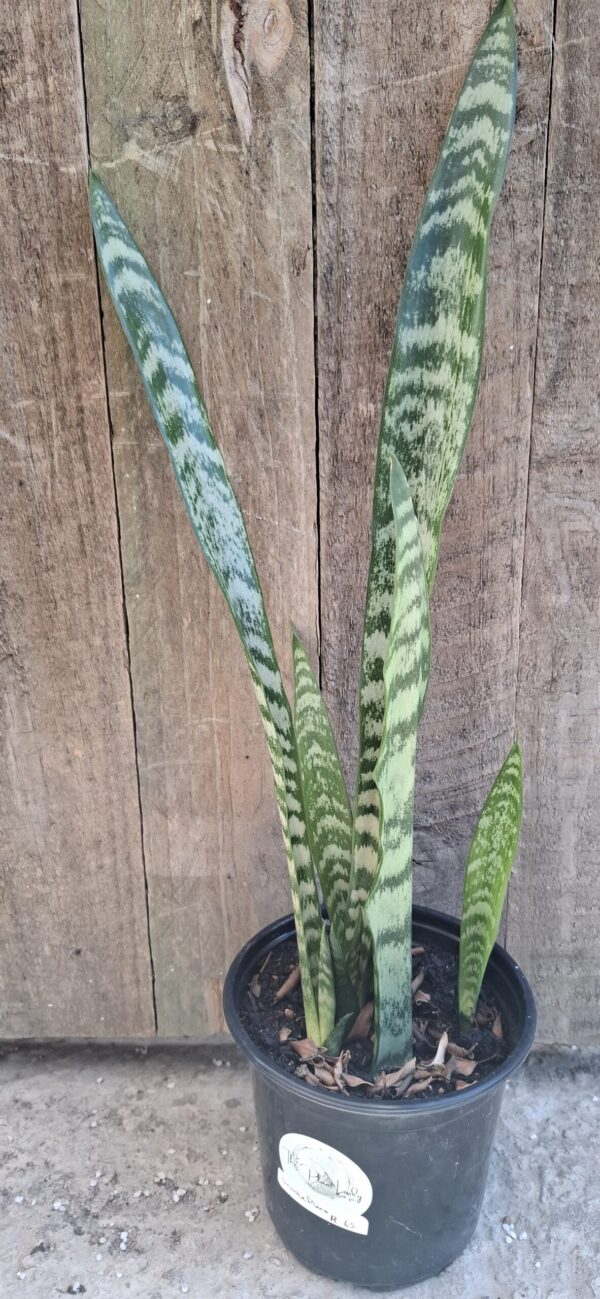
Snake Plant Sansevieria
R45
In stock
You must be logged in to post a review.








Reviews
There are no reviews yet.