
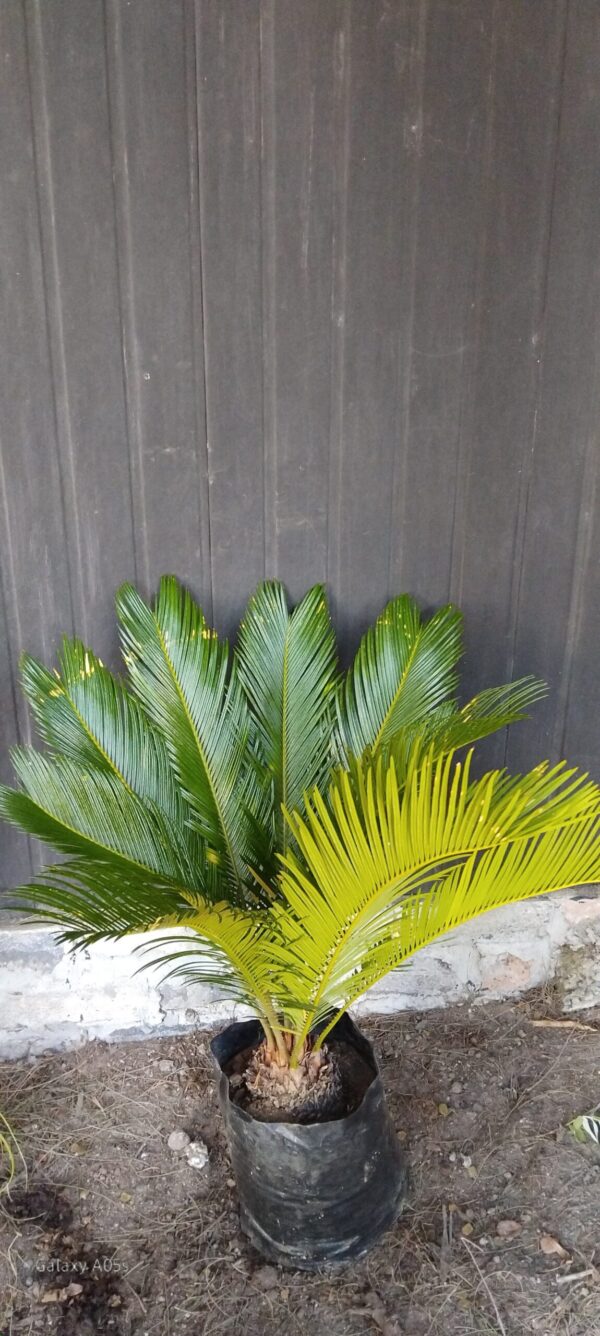
Sago Palm (Cycas revoluta)
Add an instant touch of exotic, high-end structure to your landscape or interior with the Sago Palm. Despite its common name and striking resemblance to a miniature palm tree, the Sago Palm is actually a Cycad—an ancient group of prehistoric plants that predates the dinosaurs.
It features an architectural rosette of stiff, glossy, deep-green, feather-like fronds that arch gracefully from a rugged, textured trunk. Growing at a notoriously slow and majestic pace, this long-lived plant is highly prized by landscape designers for its symmetry and structural impact. Exceptionally tough and adaptable, it thrives just as beautifully as a low-maintenance houseplant as it does anchoring a dramatic, waterwise garden layout.
☀️ Quick-Look Specifications
* Plant Type: Cycad / Architectural Accent
* Growth Habit: Stiffly rosetted, symmetrical, and slow-growing
* Mature Size (Outdoors):2m to 3m High × 2m Wide (Takes many decades to reach this size)
* Mature Size (Indoors/Potted): Retains a compact, easily manageable size
* Foliage: Rigid, high-gloss, dark green fronds
* Hardiness: Highly drought-hardy and wind-resistant; handles moderate frost (tolerates short drops down to approximately -9°C).
💧 Detailed Growing Conditions
Light: Full Sun to Bright, Indirect Light
* Outdoors: Performs exceptionally well in Full Sun to Partial Shade In regions with scorching, intensely hot summer climates, providing light afternoon shade will prevent the elegant fronds from developing sun-scorch or a bleached yellow hue.
* Indoors: Place it in a well-lit room that receives plenty of bright, indirect sunlight. Avoid dark corners, as insufficient light will cause new fronds to grow out long, weak, and leggy.
Water: Low to Moderate (Waterwise Once Established)
* The Golden Rule: The Sago Palm is highly susceptible to root rot and must never sit in waterlogged soil
* Allow the soil or potting mix to dry out significantly between waterings. During winter, reduce watering dramatically—only providing enough moisture to keep the soil from bone-drying completely.
Soil: Rich, Sandy & Superbly Drained
* Thrives in a sandy, well-aerated, loam-rich soil medium.
* For container-grown plants, always use a premium, free-draining potting soil amended with plenty of coarse river sand, perlite, or pumice. It easily tolerates a wide soil pH range
Maintenance & Management: Very Low
* Pruning: Requires almost no pruning. Only snip off the lowest, oldest fronds close to the trunk if they turn completely brown, dry, and spent. Never cut off yellowing leaves that are still alive, as the plant actively pulls nutrients from them.
* Feeding: A light feeder. Apply a slow-release, balanced fertilizer or a specialized cycad/palm food once in spring and once in mid-summer.
* Flushes: Sago Palms produce new leaves in sudden, dramatic bursts called “flushes.” When the soft, vulnerable new fronds emerge all at once from the center, avoid moving or disturbing the plant until the leaves fully unfurl and harden off.
🏡 Top Landscape & Retail Uses
* Focal Accent Plant:* Stunning when used as a symmetrical focal point in rock gardens, succulent beds, and minimalist, modern architectural landscapes.
* Premium Container Showpiece:* Makes a majestic, luxury statement when potted into oversized terracotta or sleek stone pots on sunny patios, pool decks, or flanking entranceways.
* High-End Houseplant: Highly popular for bright indoor spaces, offices, and sunny conservatories due to its clean, structural lines and low water requirements.



Reviews
There are no reviews yet.