
Description
Plectranthus grandidentatus (Large-Toothed Spurflower / Grooftand-spoorblom)
If you are looking for an iron-clad, fast-growing groundcover that effortlessly transforms dry, shaded problem areas into a lush paradise, *Plectranthus grandidentatus* is the ultimate solution. Indigenous to the forested margins and rocky kranses of South Africa, this highly rewarding, evergreen perennial is prized for its beautiful texture and bulletproof resilience.
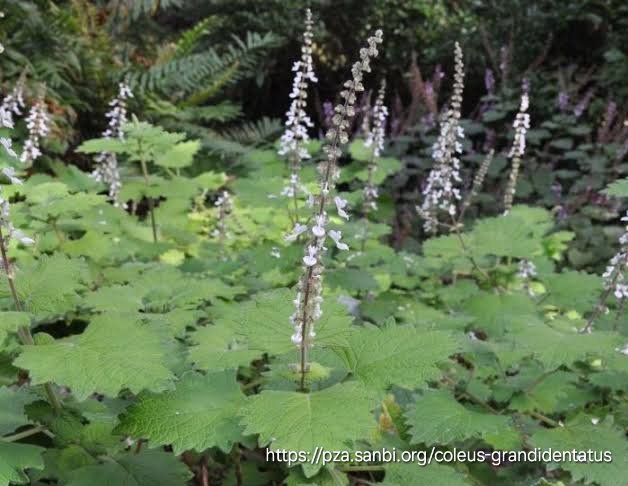
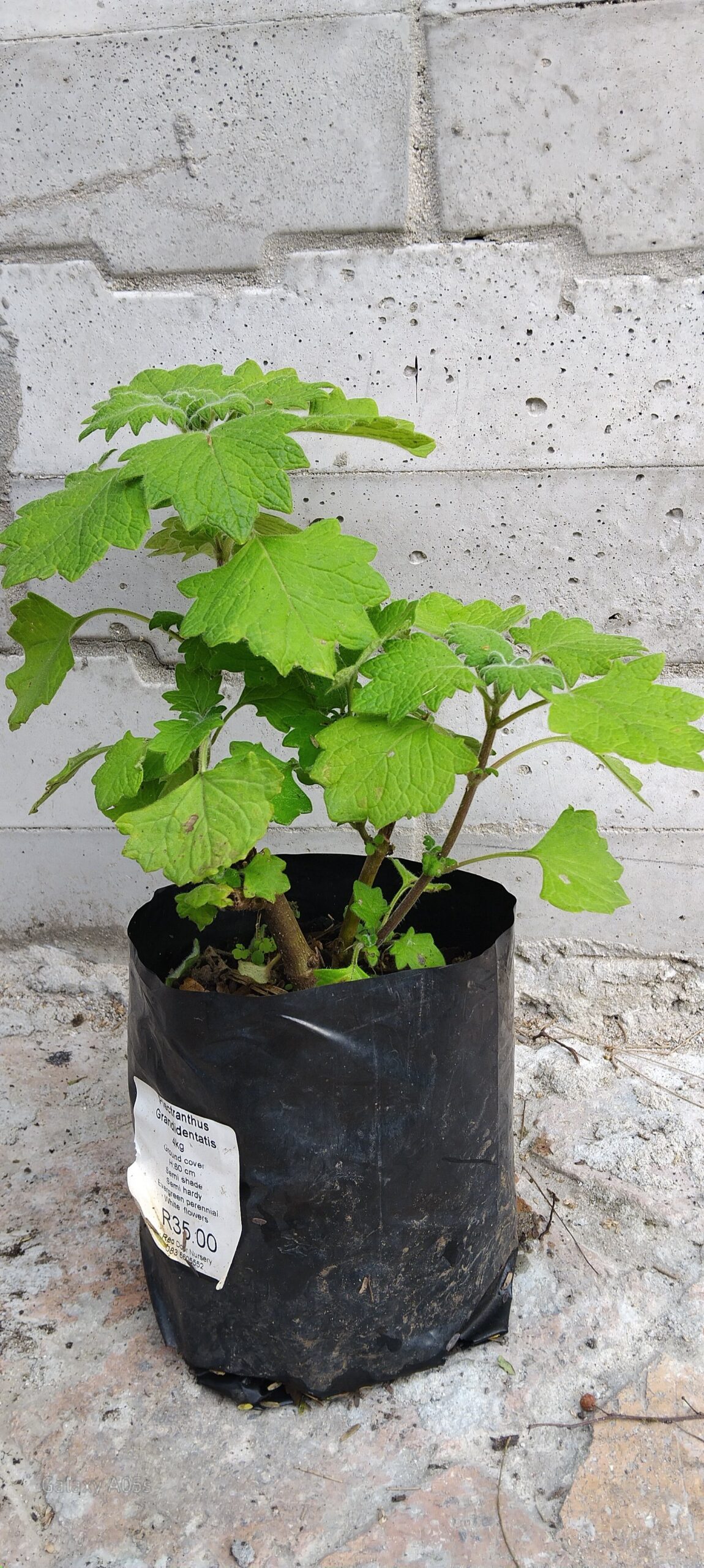
The standout feature of this plant is its soft, oversized, pale green leaves, which boast dramatically scalloped, “large-toothed” edges (*grandidentatus*). The entire plant is covered in a soft, velvety down, giving it a touchable, silvery-green shimmer in the shade. From autumn through winter, it lifts the garden with an abundance of elegant, upright spikes bearing delicate, two-lipped white or pale mauve flowers that local pollinators adore.
☀️ Quick-Look Specifications
* Plant Type: Indigenous Evergreen Perennial / Groundcover
* Growth Habit: Low-scrambling, trailing, and mat-forming
* Mature Size: 30cm to 50cm High × 1m to 1.5m Wide
* Bloom Season: Autumn to Winter (a fantastic source of cooler-season color)
* Flower Color: Soft white to very pale lilac
* Hardiness: Semi-frost hardy; excellent drought and wind tolerance once established
💧 Detailed Growing Conditions
Light: Semi-Shade to Deep Shade
* This is a true shade-lover. It flourishes best in semi-shade, dappled forest light, or full morning sun with afternoon protection.
* It handles deep shade better than most groundcovers, making it ideal for planting under dense tree canopies or along dark south-facing walls. Avoid harsh, direct midday sun, which will bleach and burn the velvety leaves.
Water: Low to Moderate (Waterwise Once Established)
* While it enjoys regular water during the warm summer growing season, *Plectranthus grandidentatus* is remarkably waterwise once its root system is established.
* Thanks to its slightly succulent stems and velvety leaves (which reduce water loss), it tolerates dry shade surprisingly well. Allow the soil to dry out slightly between waterings.
Soil: Well-Drained & Organic-Rich
* Thrives in loose, loam-rich soils packed with organic compost or leaf mould, mimicking its natural forest-floor habitat.
* Good drainage is essential. It adapts easily to rocky or sandy soils, but will struggle in heavy, un-amended clay that stays waterlogged.
Maintenance & Management: Very Low
* Pruning: Like most plectranthus species, it can get a bit untidy or “woody” after a heavy winter flowering season. Simply cut the plant back hard by half in late winter or early spring. This triggers an immediate wave of dense, tight, lush new foliage.
* Propagation: Its scrambling stems naturally root wherever they touch damp soil. You can easily spade off rooted sections to transplant elsewhere, or strike stem cuttings directly in damp soil.
🏡 Top Landscape & Retail Uses
* The Ultimate Under-Tree Groundcover: Solves the classic garden dilemma of trying to grow a lush carpet under large, shallow-rooted trees where grass refuses to grow.
* The Living Living-Wall “Spiller”: Because of its trailing, scrambling nature, it is a magnificent candidate for vertical wall pockets, hanging baskets, and retaining walls, cascading down like a soft, textured curtain.
* Forest & Woodland Gardens: Adds beautiful texture, depth, and structural contrast when mass-planted alongside dark ferns, hostas, or broad-leafed clivias.
* Waterwise Landscapes: An excellent choice for eco-conscious or water-restricted gardeners looking for high visual impact with low water inputs.




Reviews
There are no reviews yet.