
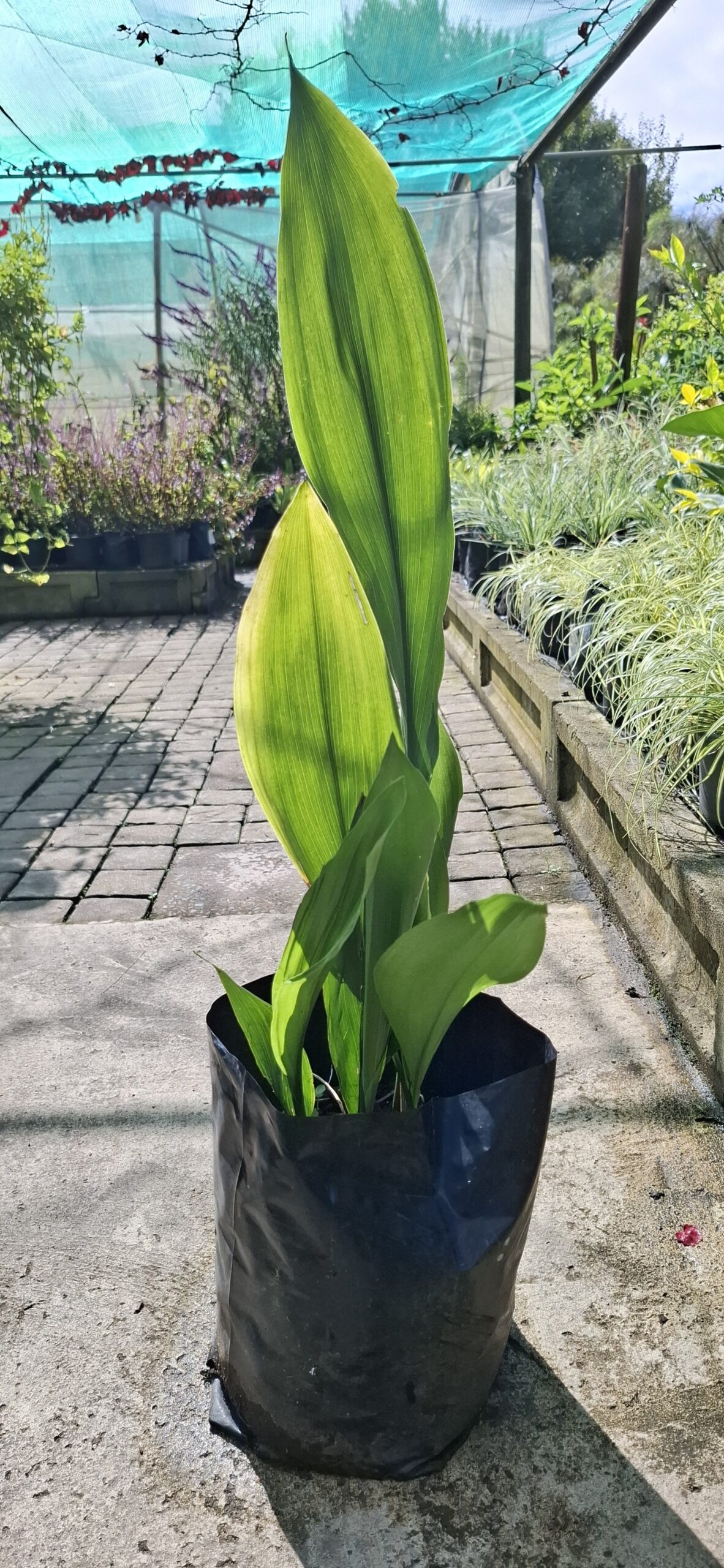
Description
Cast Iron Plant
Aspidistra elatior
✦ Great Indoor Plant
Growing Conditions
SUNLIGHT
Deep shade to partial shade; thrives under tree canopy or in north-facing rooms with no direct sun. Direct sun, especially afternoon sun, will cause leaf bleaching and scorch.
WATERING
Water thoroughly every 10–14 days in summer, allowing the top 3–4 cm of soil to dry out between waterings. Reduce to once every 3–4 weeks in winter. Overwatering is the primary cause of decline — this plant tolerates drought far better than waterlogging.
SOIL TYPE
Well-draining, humus-rich loam. A mix of 60% quality potting soil, 20% coarse river sand, and 20% compost works well. Avoid heavy clay soils that retain moisture around the roots.
TEMPERATURE
Tolerates 5°C–35°C; performs best between 15°C and 27°C. Hardy enough for most South African climates, though prolonged frost below 3°C can damage foliage in open garden situations.
HUMIDITY
Adaptable to a wide range — tolerates the dry indoor air of air-conditioned spaces as well as humid coastal conditions. Average indoor humidity of 40–60% is ideal.
FERTILISING
Feed with a balanced slow-release granular fertiliser (e.g. 3:1:5) once in early spring and once in midsummer. Avoid over-fertilising, which can cause tip burn on the leaves. A diluted liquid fertiliser at half strength can be applied monthly during the growing season if faster improvement is desired.
GROWTH RATE
Slow — typically produces only 4–6 new leaves per year under optimal conditions. Patience is essential, but established clumps gradually spread into impressive, full specimens over several years.
MATURE SIZE
0.6m–0.9m tall x 0.6m–1.0m wide
✦ Great Indoor Plant
The Cast Iron Plant earns its name indoors — it tolerates low light, irregular watering, and neglect better than almost any other houseplant, making it ideal for dim hallways, offices, or rooms with small windows. Keep it away from direct sun through glass, which will scorch its leaves, and wipe the broad leaves occasionally to keep them dust-free and glossy.
Did You Know?
Aspidistra elatior is pollinated not by insects or wind, but by soil-dwelling organisms — most likely fungus gnats, woodlice, or even slugs — because its tiny, fleshy flowers emerge directly at soil level and are almost completely hidden, one of the most unusual pollination strategies of any cultivated plant.


Reviews
There are no reviews yet.